
Waterproof vs Water-Resistant Bike Bags: What Actually Keeps Your Gear Dry
<p>Rain is the moment a bike bag stops being a style choice and starts being equipment. Two bags can look
identical on the shelf, carry the same volume and mount the same way — and behave completely differently
after forty minutes of steady rain. The difference is usually hidden in three places: the fabric, the seams
and the closure.</p>
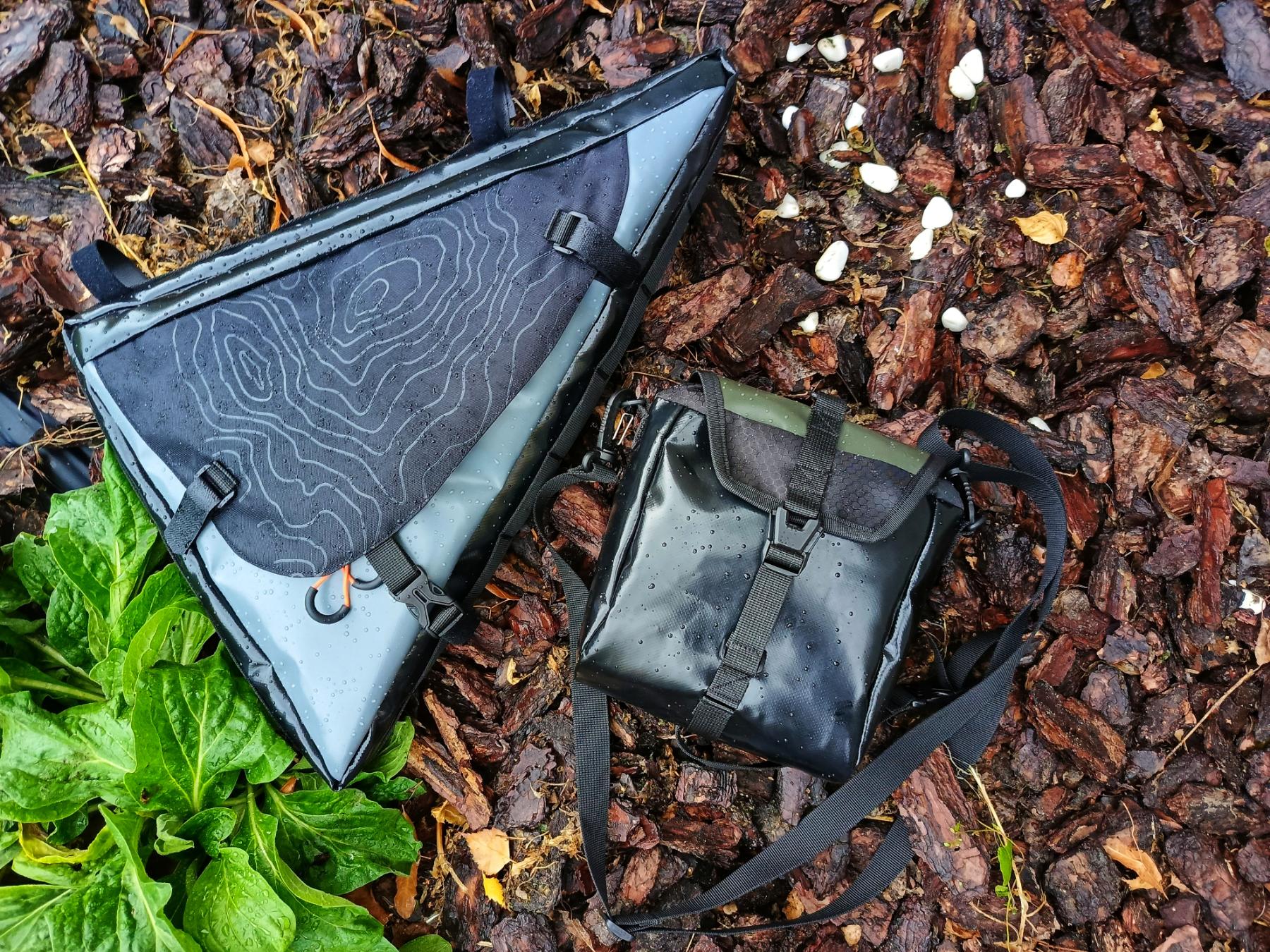
<p><img src="https://lesenok.shop/image/catalog/velosumkavodostijkaframebaggpacklesenokbikepacking5.jpg" alt="LESENOK handmade waterproof frame bag mounted in the main triangle of a gravel bike" style="width: 55%; float: right; margin: 0 0 12px 18px;" /></p>
<h2>Water-resistant, waterproof, and why shops use both words</h2>
<p><strong>Water-resistant</strong> means the outer fabric repels water for a while. Light rain beads up and
rolls off, and the contents stay dry on a short ride. Given enough time, pressure or spray from the rear wheel,
water eventually works its way through — usually not through the fabric itself, but through the stitch holes
and the zipper.</p>
<p><strong>Waterproof</strong> means the whole package is built to keep water out: a coated or laminated fabric,
seams that are taped or protected by the construction, and a closure that does not act like a funnel. A bag is
only as waterproof as its weakest opening — which is why a roll-top with a plain fabric body often outperforms
a “technical” bag with an exposed zipper.</p>
<h2>The three places water actually gets in</h2>
<h3>1. The zipper</h3>
<p>A standard coil zipper is a line of holes by design. Water-resistant zippers help, but on a bike they sit in
the spray line and are the most common leak path. If you want a bag that survives long rain, look at how the
zipper is protected: a storm flap over it, a zipper that faces down or away from the wheel, or no zipper at all.</p>
<h3>2. The seams</h3>
<p>Every stitch is a puncture in the fabric. Sealed seams, bound edges or a construction that puts the seam out
of the water path is what separates a bag that shrugs off rain from one that slowly wicks it in. This is where
handmade construction shows: a maker who sews the bag can place and protect seams around your specific frame,
instead of shipping one shape to everyone.</p>
<h3>3. The closure and mounting position</h3>
<p>A roll-top closed three times is the most reliable seal you can carry. A flap with a buckle is second. A
zipper on top is the most convenient, and the most exposed. Position matters too: a bag hanging just behind
the front wheel gets a constant jet of dirty water, while the same bag inside the frame triangle stays far
drier on the same ride.</p>
<h2>Which one do you actually need?</h2>
<ul>
<li><strong>City commuting, 20–40 minutes.</strong> Water-resistant is usually enough — unless a laptop or
documents are in the bag. Then treat it as a waterproof requirement, or use a dry liner inside.</li>
<li><strong>Gravel day rides.</strong> Spray and mud matter more than rainfall. Look at where the bag sits and
how the closure is protected, not only at the fabric name.</li>
<li><strong>Multi-day bikepacking.</strong> Sleeping gear and clothes are non-negotiable. Waterproof closure,
protected seams, and ideally a system split across several bags so a single failure never soaks everything.</li>
<li><strong>Everything electronic.</strong> Phone, power bank, lights: keep them in the bag that closes best,
not the one that opens fastest.</li>
</ul>
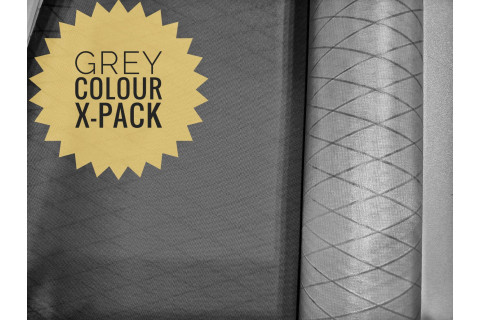
<p><img src="https://lesenok.shop/image/catalog/x-pac/izobrazhenie_viber_2026-03-28_21-19-39-731.jpg" alt="X-Pac laminated fabric bike bag by LESENOK, close-up of the closure and stitching" style="width: 55%; float: left; margin: 0 18px 12px 0;" /></p>
<h2>What fabric names tell you — and what they don't</h2>
<p>Laminated fabrics such as X-Pac carry a waterproof film between layers, which is why they are popular for
bikepacking: light, stiff enough to hold shape, and the film does not soak. Coated nylons and polyesters like
Cordura are extremely abrasion-resistant, and their water performance depends on the coating and how it is
finished. PVC-backed fabrics are the most straightforwardly waterproof and the heaviest.</p>
<p>None of that decides the outcome on its own. A laminated fabric with an exposed zipper still lets water in;
a simpler fabric with a roll-top and protected seams keeps gear dry. Read the construction, not only the
material name. We compared the three families in detail in
<a href="https://lesenok.shop/blog/how-to-choose-between-x-pac-cordura-and-pvc-bike-bags">How to Choose Between X-Pac, Cordura, and PVC Bike Bags</a>.</p>
<h2>Where LESENOK bags fit</h2>
<p>LESENOK is a Ukrainian workshop in Lviv: every bag is handmade, and sizes are made to the bike rather than to
a size chart. That matters for weather protection in a specific way — a frame bag cut to your exact triangle sits
tight against the tubes, leaves no gap for spray to collect, and does not flap and open a seam on rough ground.</p>
<p>If rain is your main concern, start with the
<a href="https://lesenok.shop/waterproof-bags/">waterproof bike bags</a> line. If you want the laminated,
bikepacking-oriented build, look at the <a href="https://lesenok.shop/x-pac-bags-1/">X-Pac bags</a>. For a bag
built to your own frame, the <a href="https://lesenok.shop/bicycle-accessories/full-frame-bike-bag-combo-custom-color-size-lesenok">Full Frame Bike Bag Combo</a>
is made to your measurements and to any of the
<a href="https://lesenok.shop/available-colors">50+ colours and prints</a> in the workshop. Handlebar options
live in <a href="https://lesenok.shop/handlebars-bags/">handlebar bags</a>, and frame options in
<a href="https://lesenok.shop/full-frame-bags/">frame bags</a>.</p>
<h2>Keeping water protection working</h2>
<p>Water protection degrades with dirt, not with age. Grit sitting in a zipper or in the roll-top fold is what
breaks the seal. Rinse the bag with clean water after muddy rides, let it dry open and out of direct sun, and
never machine-wash a bag with a laminated fabric. Full routine:
<a href="https://lesenok.shop/blog/posts">our bag care and maintenance guides</a>.</p>
<h2>FAQ</h2>
<p><strong>Is any bike bag 100% waterproof?</strong><br />
A closed dry bag can be. A bag you open and close a dozen times a ride is a system: fabric, seams and closure
all have to hold. Treat “waterproof” as a level of protection, and keep the items that must not get wet in the
best-sealed compartment.</p>
<p><strong>Does a waterproof bag need a rain cover?</strong><br />
No. A cover is a workaround for a bag that is not sealed; it also flaps, catches wind and gets lost. Better to
choose the closure you need in the first place.</p>
<p><strong>Are roll-top bags less convenient?</strong><br />
On the handlebar, slightly — you unroll instead of unzipping. That is why most riders combine: a roll-top for
gear that stays packed, a zipped stem or top-tube bag for what they need while riding.</p>
<p><strong>Can a custom-made bag be waterproof?</strong><br />
Yes, and a fitted bag has an advantage: no gaps, no flapping, and the seams can be placed away from the spray
line of your specific frame.</p>
<p><strong>What should I check before buying?</strong><br />
Where the zipper sits, whether it has a flap over it, how the seams are finished, and where the bag sits
relative to the wheels. Those four answers predict rain performance better than any fabric name.</p>
<p><em>Questions about a specific frame or a specific trip? Write to the workshop —
<a href="https://lesenok.shop/about_us">about LESENOK</a> and
<a href="https://lesenok.shop/contact-us/">contacts</a>.</em></p>
<script type="application/ld+json">
{
"@context": "https://schema.org",
"@graph": [
{
"@type": "Article",
"headline": "Waterproof vs Water-Resistant Bike Bags: What Actually Keeps Your Gear Dry",
"description": "Waterproof or water-resistant bike bag? Learn where rain really gets in, how zippers, seams and roll-tops differ, and which bag suits commuting, gravel and bikepacking.",
"image": "https://lesenok.shop/image/catalog/velosumkavodostijkaframebaggpacklesenokbikepacking5.jpg",
"inLanguage": "en",
"mainEntityOfPage": {"@type": "WebPage", "@id": "https://lesenok.shop/blog/waterproof-vs-water-resistant-bike-bags"},
"author": {"@type": "Organization", "name": "LESENOK", "url": "https://lesenok.shop/"},
"publisher": {"@type": "Organization", "name": "LESENOK", "url": "https://lesenok.shop/"},
"datePublished": "2026-08-20",
"dateModified": "2026-08-20",
"about": ["waterproof bike bags", "bikepacking bags", "handmade bike bags"]
},
{
"@type": "FAQPage",
"mainEntity": [
{"@type": "Question", "name": "Is any bike bag 100% waterproof?",
"acceptedAnswer": {"@type": "Answer", "text": "A closed dry bag can be. A bag you open and close a dozen times a ride is a system: fabric, seams and closure all have to hold. Keep items that must not get wet in the best-sealed compartment."}},
{"@type": "Question", "name": "Does a waterproof bike bag need a rain cover?",
"acceptedAnswer": {"@type": "Answer", "text": "No. A cover is a workaround for a bag that is not sealed; it flaps, catches wind and gets lost. Choose the closure you need instead."}},
{"@type": "Question", "name": "Are roll-top bike bags less convenient than zipped ones?",
"acceptedAnswer": {"@type": "Answer", "text": "Slightly, on the handlebar. Most riders combine a roll-top for packed gear with a zipped stem or top-tube bag for items they need while riding."}},
{"@type": "Question", "name": "Can a custom-made bike bag be waterproof?",
"acceptedAnswer": {"@type": "Answer", "text": "Yes. A fitted bag has an advantage: no gaps, no flapping, and seams can be placed away from the spray line of your specific frame."}},
{"@type": "Question", "name": "What should I check before buying a waterproof bike bag?",
"acceptedAnswer": {"@type": "Answer", "text": "Where the zipper sits, whether a storm flap covers it, how the seams are finished, and where the bag sits relative to the wheels."}}
]
}
]
}
</script>
No comments yet.